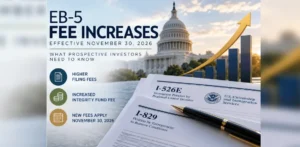
The Department of Homeland Security (DHS) has taken an important step this week toward completing the implementation of the EB-5 Reform and Integrity Act of 2022 (RIA) by publishing a comprehensive proposed regulation that would modernize the rules governing the EB-5 Immigrant Investor Program. While the announcement may appear to be a routine regulatory update, it is, in fact, one of the most significant developments for the EB-5 industry since the RIA became law.
The proposed regulation, EB-5 Reform and Integrity Act of 2022; Ensuring the Integrity of the EB-5 Program; Automatic Revocation of Petitions for Immigrant Classification, would amend regulations governing EB-5 petitions, conditional permanent residence, regional center oversight, and petition revocations. More importantly, it provides long-awaited guidance on how U.S. Citizenship and Immigration Services (USCIS) intends to administer and enforce many provisions of the RIA that have remained uncertain since its enactment.
Moving from Statute to Practical Implementation
Although the RIA fundamentally reshaped the EB-5 program in 2022, Congress intentionally left many operational details to be determined by DHS through future regulations. Over the past several years, USCIS has relied largely on policy manuals, agency guidance, FAQs, and individual adjudications to interpret the new law. While those resources have been helpful, they do not carry the same legal weight as formal federal regulations and can be modified more easily by the agency.
This proposed rule is significant because it transforms many of those interpretations into binding regulations. Once finalized, these rules will provide a more stable and predictable framework for investors, regional centers, developers, lenders, and immigration practitioners. For investors making a long-term immigration and financial commitment, greater regulatory certainty reduces the risk that important procedural rules could shift unexpectedly during the life of their investment.
Greater Clarity Means Fewer Surprises
One of the biggest challenges following passage of the RIA has been the lack of detailed guidance on numerous operational issues. Questions surrounding documentation requirements, project modifications, regional center compliance, petition eligibility, and investor protections have often been resolved through evolving agency practice rather than clearly established regulations.
The proposed rule is expected to clarify many of these areas by explaining how USCIS will interpret and apply the statutory requirements. Greater clarity should promote more consistent adjudications, reduce uncertainty during the petition process, and lessen the likelihood that investors will receive Requests for Evidence (RFEs) or encounter delays caused by differing interpretations among adjudicators.
Increased Predictability for Regional Centers and Project Sponsors
The proposed regulations are equally important for regional centers and project developers. Since the RIA was enacted, many sponsors have operated without definitive answers regarding reporting obligations, compliance requirements, material project changes, investor protections, and recordkeeping responsibilities.
Formal regulations should provide a clearer roadmap for maintaining compliance with the enhanced integrity provisions introduced by the RIA. Better-defined regulatory standards will allow project sponsors to structure offerings more confidently while helping investors evaluate whether a project is being administered in accordance with federal requirements.
Strengthening the Integrity of the EB-5 Program
One of the primary objectives of the Reform and Integrity Act was to strengthen oversight of the EB-5 program and increase investor protections. The statute introduced extensive compliance measures, including annual regional center certifications, fund administration requirements, enhanced recordkeeping, audits, background checks, and expanded enforcement authority.
Most reputable regional centers have already implemented these safeguards. However, the proposed regulations explain how DHS intends to enforce these requirements in practice. By establishing clearer compliance expectations, the rule should help distinguish well-managed regional centers from those that fail to meet the program’s heightened standards, ultimately improving confidence in the EB-5 marketplace.
The Automatic Revocation Provisions Deserve Attention
One aspect of the proposed rule that has attracted considerable interest is its discussion of the “Automatic Revocation of Petitions for Immigrant Classification.” Although the title may sound alarming, investors should not interpret it as an indication that USCIS intends to broadly revoke approved EB-5 petitions.
Instead, the proposed regulation seeks to define the specific circumstances under which the law requires automatic revocation when statutory eligibility no longer exists. Because the final regulatory language has not yet been adopted, immigration attorneys and industry participants will be closely reviewing these provisions to better understand how they may affect investors if a project or regional center later encounters compliance or operational issues.
A More Predictable Future for EB-5
Perhaps the greatest benefit of this proposed rule is the increased predictability it promises. For several years, many questions about implementation of the RIA have remained unresolved, resulting in uncertainty for investors and project sponsors alike. Comprehensive regulations provide an opportunity to establish a consistent set of rules that can guide USCIS adjudications and reduce reliance on evolving agency guidance.
More predictable rules also tend to reduce litigation by providing clearer standards for both the government and private stakeholders. While disagreements will undoubtedly continue to arise, formal regulations generally create greater consistency than policy memoranda or informal guidance alone.
What Happens Next?
It is important to remember that these regulations are currently only proposed. Before they become effective, DHS will accept public comments, review stakeholder feedback, and may revise portions of the proposal before publishing a final rule. Until that process is complete, the provisions of the RIA remain in effect under the current regulatory framework.
Nevertheless, the publication of this proposed rule represents a major milestone in the continued evolution of the EB-5 program. For investors considering an EB-5 investment today, the proposal signals DHS’s commitment to providing a more transparent, predictable, and stable regulatory environment. For the EB-5 industry as a whole, these regulations are likely to serve as the long-awaited operational blueprint for implementing the Reform and Integrity Act for years to come.