For those prospective EB-5 investors considering a hotel project, the current environment presents a compelling combination of favorable supply-demand dynamics and strong travel fundamentals. These trends can be particularly advantageous because economic conditions and industry fundamentals are aligning to increase the likelihood of favorable outcomes.
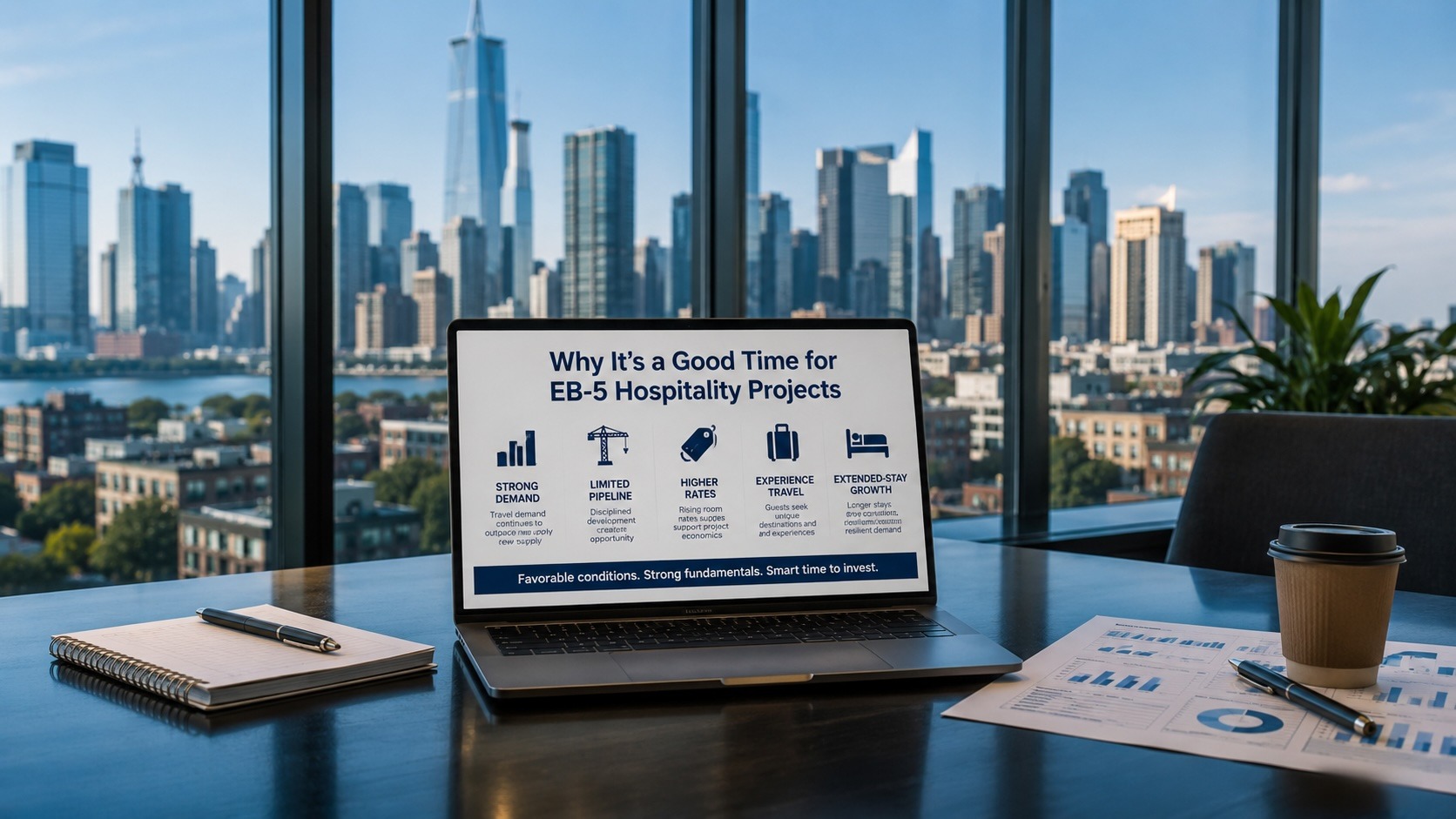
Strong Demand Continues to Outpace New Supply
One of the most important factors supporting new hotel development is that demand growth is once again exceeding supply growth in many segments of the U.S. lodging market. Industry forecasts project that hotel demand will grow faster than new room supply during 2026, supporting occupancy levels and room-rate growth. RevPAR (Revenue Per Available Room), one of the industry’s most important performance metrics, is expected to continue increasing as demand remains healthy.
This is particularly encouraging for new developments because hotels opening into a market with constrained supply often achieve stronger ramp-up performance and pricing power.
Limited Construction Pipeline Creates Opportunity
Although travel demand has been strong, many hotel projects that would traditionally have moved forward have been delayed or cancelled because of higher interest rates, tighter bank underwriting, and increased construction costs. As a result, the development pipeline is significantly more disciplined than during previous expansion cycles.
Reduced future competition can create a favorable operating environment when the hotel opens, enabling projects to stabilize quickly, building a strong foundation for a future refinance or resale.
Higher Room Rates Support Project Economics
Hotel operators have demonstrated substantial pricing power over the last several years. Average daily rates (ADR) remain well above pre-pandemic levels, and many hotel brands continue to report RevPAR growth. Major operators such as Hilton Worldwide have recently increased their revenue outlooks based on stronger travel demand.
For investors, stronger ADRs help offset elevated construction costs and support higher projected cash flows, increasing the likelihood of a successful outcome.
The Rise of Experience-Driven Travel
Travelers are increasingly seeking unique destinations, lifestyle hotels, resorts, and experiential lodging. This trend benefits projects located near national parks, outdoor recreation destinations, wine regions, wellness retreats, and other experience-based demand generators.
This is particularly relevant for many EB-5 projects, which often involve destination-oriented developments in rural areas. Rural hotels that can combine strong demand drivers with unique guest experiences are well positioned to capitalize on this shift in consumer behavior.
Extended-Stay Hotels Remain a Strong Performer
One of the most resilient segments of the hospitality industry continues to be extended-stay lodging. Remote work, project-based employment, healthcare travel, infrastructure projects, manufacturing expansion, and data center construction all create demand for guests staying weeks or months rather than days.