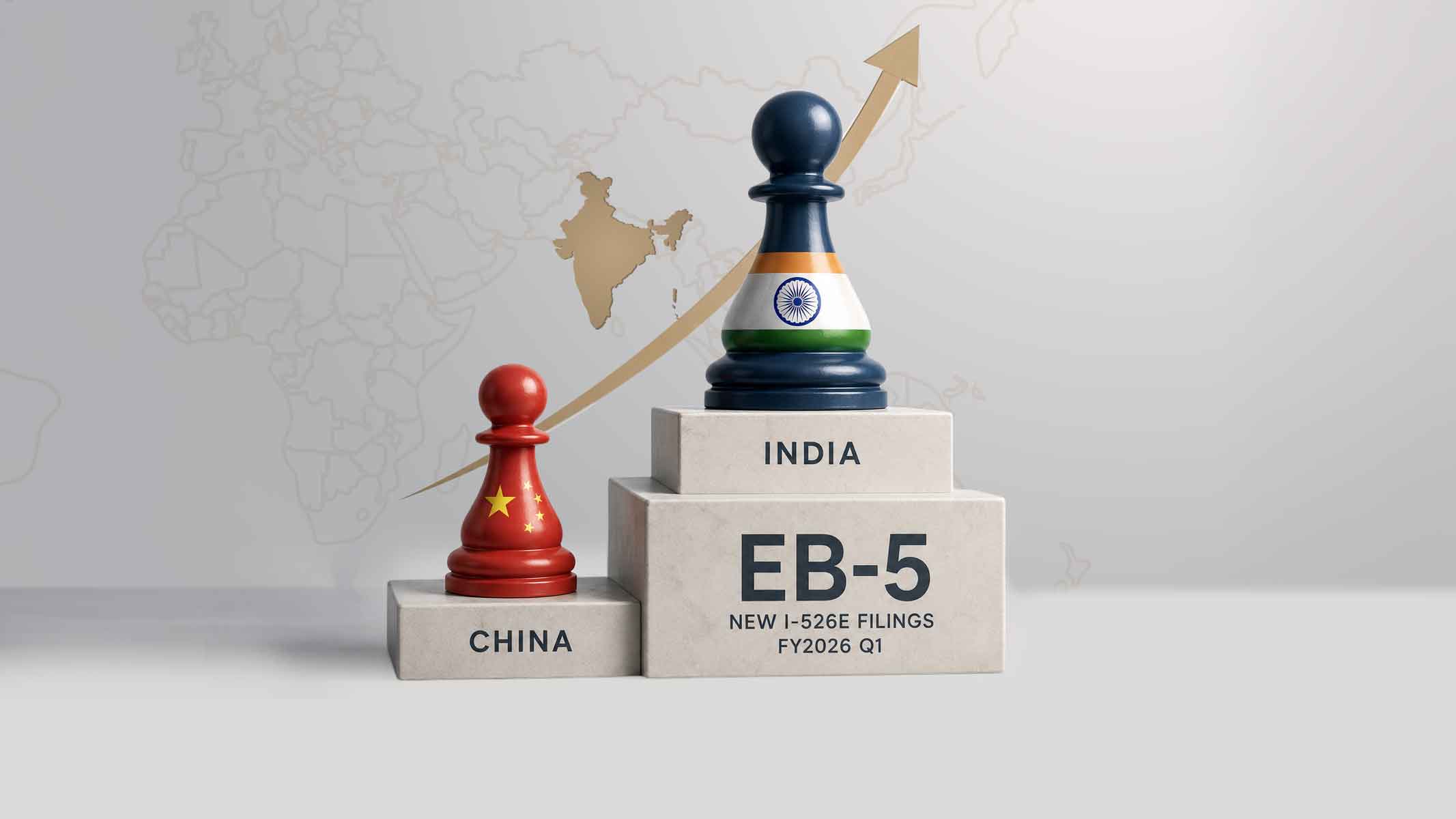
Fiscal year (FY) 2026 has seen the emergency of several new tends in EB-5. Recent USCIS data indicates a significant shift in investor demand, with India becoming the leading source of new I-526E petitions for the first time since the enactment of the EB-5 Reform and Integrity Act (RIA) of 2022.
At the same time, approval rates appear to be softening from the exceptionally high levels seen over the past two years, suggesting that USCIS is taking a more rigorous approach to resolving petitions. Let us look at these emerging trends.
India Emerges as the Leading Source of New EB-5 Petitions
One of the most notable developments in FY2026 is the continued growth of Indian participation in the EB-5 program. According to USCIS quarterly data, Indian investors filed more new I-526E petitions during the first quarter of FY2026 than investors from any other country, including China. This represents a significant milestone and reflects the changing dynamics of global EB-5 demand.
Several factors appear to be driving this trend. First, Indian investors continue to be attracted by the opportunity to file for adjustment of status concurrently with their I-526E petition, allowing many applicants already in the United States, especially H-1B visa holders, to obtain employment authorization and advance parole while awaiting adjudication. In addition, growing awareness of the reserved visa categories has encouraged many Indian investors to pursue rural and high-unemployment area projects, which currently remain available without visa backlogs.
Although India has now become the leading source of new quarterly filings, it is important to distinguish this trend from cumulative filing totals. Chinese investors still account for the largest overall share of post-RIA I-526E petitions filed since 2022. Nevertheless, the latest data suggests that India is now driving much of the program’s current growth.
Approval Rates Begin to Decline
Another emerging trend is a modest decline in I-526E approval rates. Throughout FY2024 and FY2025, USCIS approved well over 90 percent of adjudicated petitions, creating one of the strongest approval environments in the history of the EB-5 program. During this period, petition adjudications accelerated significantly while denials remained relatively uncommon.
The first quarter of FY2026, however, presents a somewhat different picture. USCIS adjudicated fewer petitions than in the previous quarter, while denials increased sufficiently to reduce the overall approval percentage. Although approval rates remain favorable by historical standards, the data suggests that USCIS is applying greater scrutiny than investors have experienced during the past two years.
This change does not necessarily indicate a fundamental shift in agency policy, but it does reinforce the importance of submitting a thoroughly documented petition from the outset.
What May Be Driving Increased Scrutiny?
Several factors may explain the evolving adjudication landscape. The Reform and Integrity Act introduced significant changes to the EB-5 program, including enhanced compliance requirements for regional centers, new project approval procedures, and greater transparency throughout the investment process. As a result, USCIS may now expect investors and their representatives to submit more comprehensive petitions at the time of filing.
In addition, lawful source and path of funds have long been among the most closely examined aspects of every EB-5 petition. As USCIS gains more experience adjudicating post-RIA cases, adjudicators may be applying these requirements more consistently and expecting complete documentation without relying on RFEs to cure deficiencies.
Finally, the agency has, across several immigration benefit categories, placed increasing emphasis on deciding cases based on the initial evidence submitted. While there is no published EB-5 policy directing adjudicators to deny petitions without first issuing RFEs or NOIDs, broader adjudication practices across USCIS may be influencing how I-526E petitions are reviewed.
What This Means for Investors
The emerging trends in FY2026 present both opportunities and important considerations for prospective EB-5 investors. Strong demand from India demonstrates the continued attractiveness of the program, particularly for individuals already in the United States who may benefit from concurrent filing. At the same time, a modest decline in approval rates and reports of increased scrutiny reinforce the importance of thorough preparation.
Investors should work closely with experienced immigration counsel and source-of-funds professionals to ensure that every aspect of their petition is fully documented before filing. Rather than assuming that USCIS will issue an RFE if additional information is needed, applicants should prepare their I-526E petition with the expectation that the initial submission may represent their best, and potentially only, opportunity to establish eligibility.
As FY2026 progresses, these trends will be worth monitoring closely. Whether they represent the beginning of a long-term shift in investor demographics and adjudication practices or simply a temporary fluctuation remains to be seen. For now, however, demand for EB-5 remains strong, but the standard for a successful petition appears to be rising.
The above article is intended for informational purposes only. Anyone with a specific question or issue relating to EB-5, especially relating to filing an I-526E petition, should consult with an experienced immigration attorney.