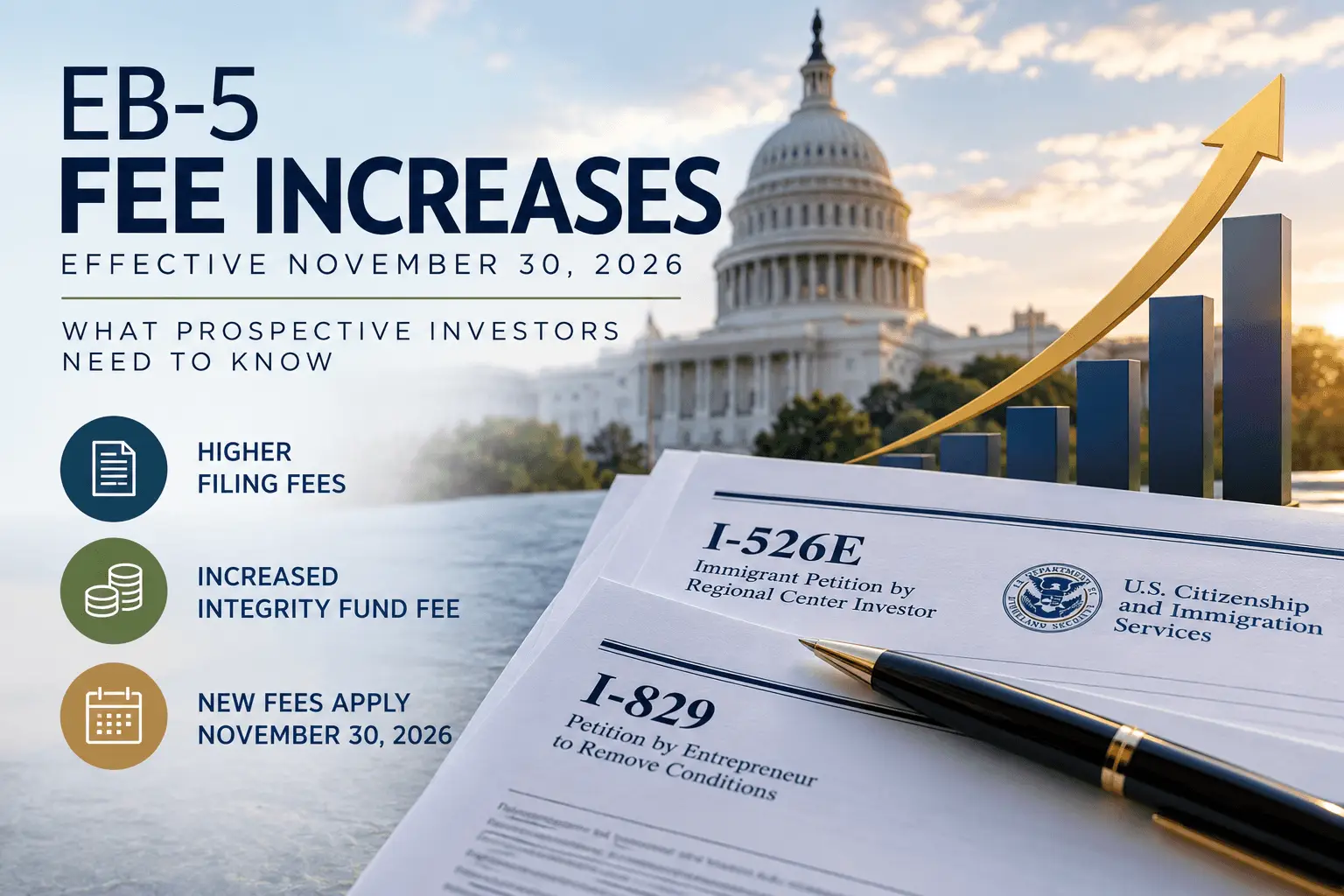
The U.S. Citizenship and Immigration Services (USCIS) fee increases taking effect November 30, 2026, will significantly increase the cost of filing an EB-5 petition. For prospective investors considering the EB-5 Immigrant Investor Program, understanding these changes is important when planning an investment and determining the timing of an immigration filing.
Significant Increases to EB-5 Filing Fees
Under the new fee schedule, the Form I-526E filing fee for regional center investors will increase from $3,675 to $7,850, an increase of $4,175. The fee for standalone investors filing Form I-526 will rise from $3,675 to $7,615. Investors filing an amendment to Form I-526E will also face a higher fee, increasing from $3,675 to $7,775.
The increases extend beyond the initial investment petition. The fee for Form I-829, which investors file to remove the conditions on their permanent residence, will rise from $3,750 to $5,000. This change is particularly relevant to investors who are already in the immigration process and those who are evaluating the total cost of pursuing permanent residence through EB-5.
The Additional Integrity Fund Fee
In addition to the initial I-526E petition fee, regional center investors must account for the separate EB-5 Integrity Fund fee. This fee will increase from $1,000 to $1,100 on November 30.
As a result, the combined cost of the initial I-526E petition and Integrity Fund fee will rise from $4,675 to $8,950 per investor. This represents an increase of $4,275, before accounting for immigration attorney fees and other expenses associated with the investment and filing process. Investors should distinguish between the petition fee and the Integrity Fund fee when budgeting for their EB-5 filing.
Why the November 30 Deadline is Important
The new fees apply to petitions, applications and requests postmarked on or after November 30, 2026. Prospective investors who are preparing to file before that date may therefore be able to avoid the higher fees, provided their filings meet the applicable requirements and are submitted in accordance with USCIS rules.
Preparing an EB-5 petition, however, requires more than completing forms and paying the filing fee. Investors must assemble documentation supporting the lawful source and path of their investment funds, complete the necessary investment paperwork, and coordinate with their immigration counsel and project representatives. These steps can take time, particularly when an investor’s source of funds involves multiple accounts, business interests or international transfers.
Investors considering a filing before November 30 should begin coordinating with their immigration attorney as early as possible. At the same time, the potential savings should not come at the expense of filing a properly prepared petition. Investors should confirm the applicable deadline, payment requirements and filing procedures with counsel rather than assume that beginning the process or transferring funds before the deadline will secure the existing fee schedule.
USCIS Fees Are Separate from the EB-5 Investment Amount
It is important to distinguish the USCIS fee increases from the EB-5 program’s required capital investment. The November 30 changes concern government filing fees and do not, by themselves, change the statutory minimum investment amount.
For qualifying investments in targeted employment areas, the current minimum investment threshold is $800,000. This investment amount is set to increase on January 1, 2027, as the EB-5 Reform and Integrity Act (RIA) mandates the adjustment of the investment amount every five years . This adjusmtne is tied to inflation.
Planning for the Full Cost of the EB-5 Process
The increased I-829 filing fee also highlights the importance of looking beyond the initial petition. EB-5 investors should consider the costs they may encounter throughout the immigration process, including the eventual filing to remove conditions on permanent residence. The applicable fees and requirements may change over time, so investors should confirm the amounts in effect when each filing becomes due.
For prospective investors who are already considering EB-5, the November 30 deadline presents a concrete financial consideration. The combined initial I-526E and Integrity Fund fees will increase by $4,275 per investor. Investors who may be ready to proceed should discuss their filing timeline with qualified immigration counsel, determine whether their documentation can be prepared properly before the deadline, and account for the higher fees if they expect to file on or after November 30.
Ultimately, the decision to proceed with EB-5 should reflect the investor’s immigration objectives, financial circumstances and assessment of the investment opportunity, not the filing fees alone. Nevertheless, understanding the upcoming fee changes and planning accordingly can help investors make informed decisions and avoid unnecessary costs.
The above article is intended for informational purposes only. Anyone with a specific question pertaiing to EB-5 or the timing of their filing should consult with an experienced immigration attorney.