For prospective EB-5 investors, few concepts are as important, and often as confusing, as the “sustainment period.” Sustainment governs how long an investor must keep their capital “at risk” in a qualifying EB-5 investment.
While this requirement has always been central to the program, the rules surrounding it changed significantly with the passage of the EB-5 Reform and Integrity Act of 2022 (RIA). Understanding how sustainment works today, and how it differs from the pre-RIA EB-5, is essential for setting realistic expectations around both immigration outcomes and capital return.
The Pre-RIA Framework: Uncertainty and Extended Timelines
Prior to the RIA, the EB-5 statute did not define a clear sustainment period. Instead, the requirement evolved through agency policy and adjudicatory practice. Investors were generally expected to keep their capital invested throughout their two-year period of conditional permanent residency. However, because of lengthy processing times for both I-526 and I-829 petitions, as well as retrogression for countries such as China and India, this often translated into a much longer real-world obligation.
In practice, investors frequently remained invested for five to seven years or more. Even when a project was completed and repaid its loan, investors often could not receive their funds back without jeopardizing their immigration status. This led to the use of “redeployment,” where repaid capital was reinvested into new at-risk opportunities to maintain immigration compliance. While necessary under the old system, redeployment introduced additional layers of risk, complexity, and uncertainty.
The RIA’s Reform: A Defined Two-Year Sustainment Period
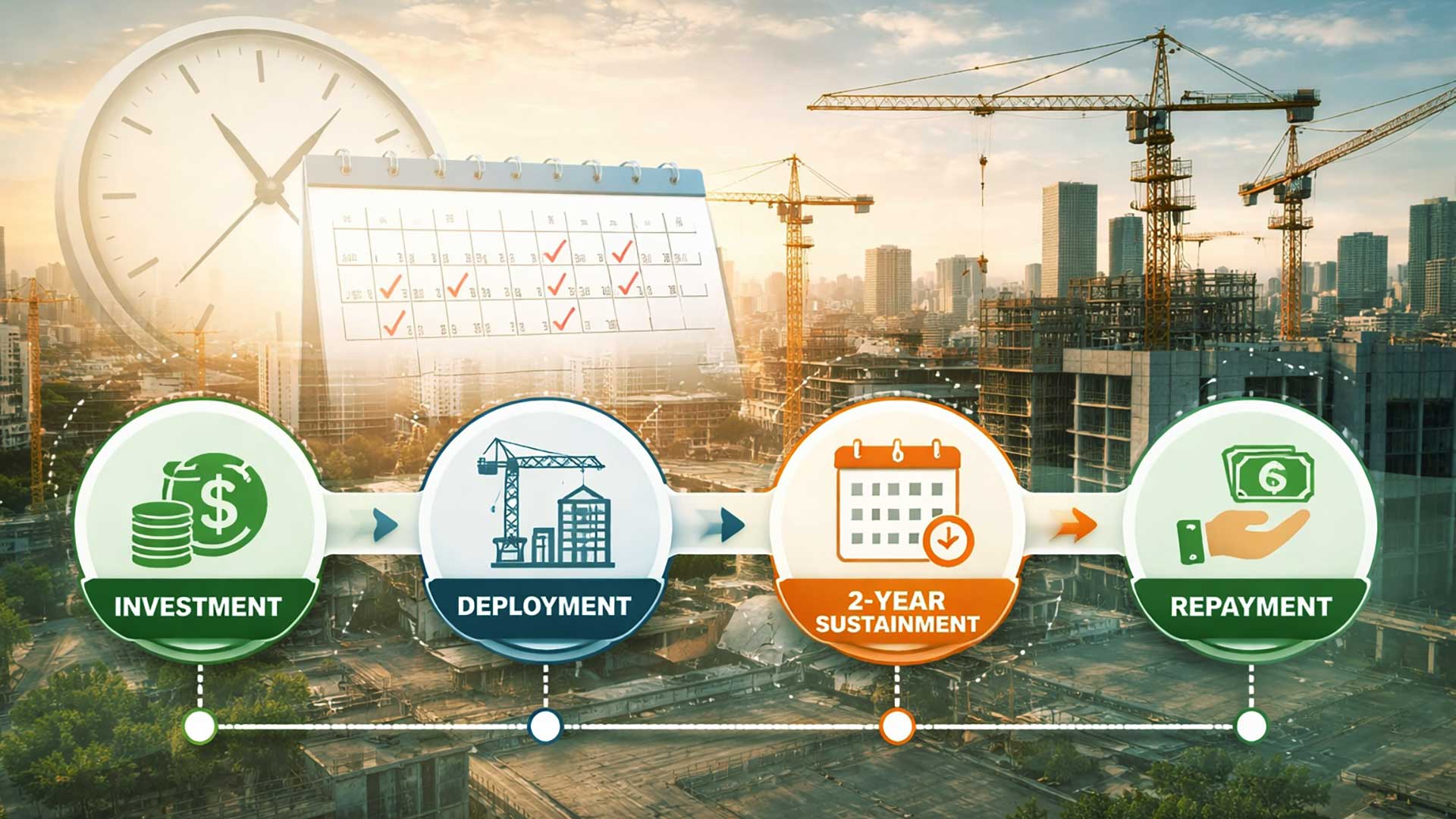
The RIA fundamentally changed this landscape by introducing a statutory sustainment period of two years. Under the new law, an investor must maintain their investment for at least two years, providing a clear and predictable baseline requirement. This provided a major shift from the prior system, replacing an open-ended and often prolonged obligation with a defined timeframe grounded in statute.
The RIA also ties the start of the sustainment period to the actual deployment of capital into the job-creating entity (JCE), rather than to immigration milestones such as a petition approval or the start of conditional residency. This change creates alignment between the economic activity of the investment and the investor’s immigration requirements.
When the Sustainment Clock Begins
A critical nuance under the RIA is that the two-year sustainment period does not necessarily begin when an investor transfers funds to the new commercial enterprise (NCE). Instead, the clock starts when the capital is fully deployed into the JCE and placed at risk in furtherance of job creation.
This distinction has practical implications. There may be a lag between subscription and deployment, particularly in projects that raise capital over time or stage their funding. Investors must evaluate project timelines to understand when their sustainment period truly begins, as this will directly affect when their capital may become eligible for return.
The Relationship Between Sustainment and Investment Duration
Although the RIA establishes a two-year minimum sustainment period, it does not require that investors will receive their capital back after two years. Most EB-5 projects are structured with longer investment terms, often ranging from three to five years or more. These timelines reflect the practical needs of the project, including construction schedules, stabilization periods, and loan repayment terms.
As a result, there is often a distinction between the legal sustainment requirement and the term of the investment. Investors should not assume that the expiration of the sustainment period will coincide with repayment, but rather view it as a regulatory threshold that must be satisfied before return of capital becomes permissible.
Separating Sustainment from Conditional Residency
Another important change introduced by the RIA is the decoupling of the sustainment period from the two-year conditional residency period. Previously, these timelines were effectively intertwined, contributing to extended investment durations. Under the new framework, they operate independently.
This means that an investor may complete the sustainment requirement before obtaining conditional residency, particularly in cases involving visa backlogs. Conversely, an investor may still be within their sustainment period after becoming a conditional resident, depending on when their funds were deployed. This separation enhances flexibility but also requires investors to think more carefully about timing.
The above article is intended for informational purposes. Anyone with a specific question or issue pertaining to a specific EB-5 investment should consult with an experienced immigration attorney.