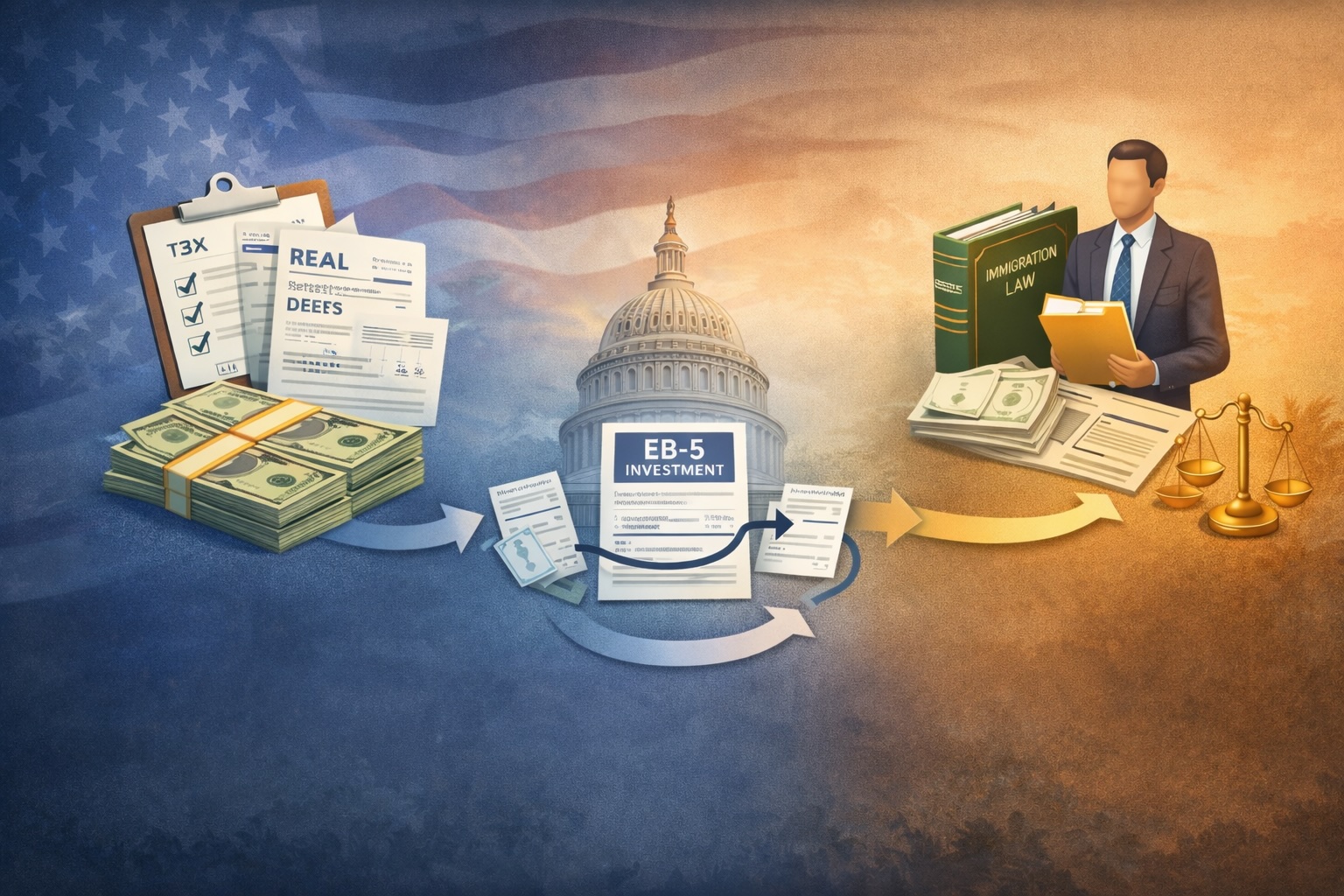
For EB-5 investors, the source of funds analysis is often the most scrutinized aspect of the I-526E petition. Adjudicators at U.S. Citizenship and Immigration Services (USCIS) are required to trace the lawful path of invested capital from its original source to the new commercial enterprise. When documentation is incomplete, inconsistent, or overly complex, the result is frequently a Request for Evidence (RFE).
However, many RFEs are avoidable with careful planning and disciplined documentation well before filing. Additionally, working with an experienced immigration attorney is also critical.
Step One: Use Simple, Clearly Traceable Lawful Sources
One of the most effective ways to avoid an RFE is to rely on source-of-funds categories that are straightforward and well understood by adjudicators. Examples include long-term earned income supported by tax returns, proceeds from the sale of real estate with clear title and closing documents, or distributions from a business that can be corroborated through audited or professionally prepared financial statements. These sources tend to generate fewer RFEs because they allow for a clean narrative and a logical paper trail. By contrast, funds derived from layered gifts, informal loans, or loosely documented cash activity often result in deeper scrutiny and follow-up requests.
Step Two: Document the Complete Path of Funds Without Gaps
Even when the underlying source is lawful, RFEs commonly arise when there are gaps in the movement of funds. Investors should ensure that every transfer, from the original account to intermediary accounts and ultimately to the EB-5 project, is fully documented with bank statements, wire confirmations, and transaction receipts. The timeline should be chronological and consistent, with no unexplained deposits or withdrawals. Where currency controls or cross-border transfers are involved, supporting evidence explaining compliance with local laws is especially important. A complete, uninterrupted path of funds reduces uncertainty and minimizes the need for USCIS to request clarification.
Step Three: Prepare a Clear, Consistent Source of Funds Narrative
A well-organized legal narrative is just as important as the underlying documents. Investors should work with experienced EB-5 counsel to present a written explanation that ties the evidence together and clearly explains how the funds were earned, accumulated, and invested. This narrative should be consistent with tax filings, financial statements, and transfer records, and should address any potential red flags, such as fluctuations in income or changes in asset ownership. When the narrative and documentation align, adjudicators are far less likely to issue an RFE simply to “connect the dots.”
Please note that the above article is intended for information purposes only. Anyone with a specific issue relating to EB-5 source of funds should consult with an experienced immigration attorney.