
DHS Proposes Comprehensive EB-5 Regulations to Fully Implement the Reform and Integrity Act

DHS has proposed comprehensive EB-5 regulations to fully implement the Reform and Integrity Act of 2022, providing greater clarity on regional center compliance, investor protections, petition adjudications, and long-term program integrity.
Emerging EB-5 Trends: India Surpasses China in New Filings While USCIS Adjudications Become More Demanding
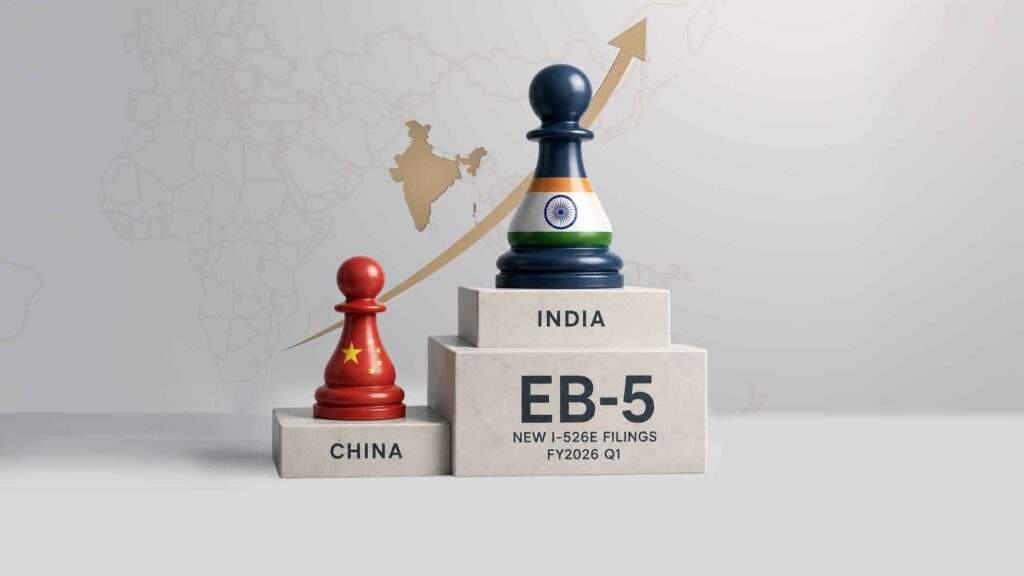
Discover the latest EB-5 trends as India becomes the leading source of new I-526E filings, USCIS approval rates soften, and investors face heightened scrutiny over source-of-funds documentation and petition preparation.
Recent Immigration Developments Affecting EB-5 Investors

Explore the latest immigration developments affecting EB-5 investors, including India’s FY2026 EB-5 visa allocation exhaustion, the federal court decision striking down the $100,000 H-1B fee, and ongoing challenges to USCIS’s Adjustment of Status policy memo.
A New Shadow Over Concurrent Processing: What USCIS’s Latest Policy Memo Means for EB-5 Investors

USCIS’s new policy memo treating Adjustment of Status as “extraordinary relief” may create major uncertainty for EB-5 concurrent filing investors. Here’s what the policy means, why EB-5 cases may be legally distinct, and how the industry is responding.
Are USCIS Adjudicators Going Straight to Denials on I-526E Petitions?

Concerns are rising that USCIS is issuing direct denials on I-526E petitions without RFEs or NOIDs. Learn why source-of-funds documentation has become more critical than ever in EB-5 adjudications.
Understanding Regulation D and Its Role in EB-5 Offerings

Regulation D is the backbone of EB-5 securities offerings. Learn how Rules 506(b) and 506(c) shape capital raising, investor eligibility, and compliance in EB-5 projects.
The Inflation Adjustment Mechanism Under the EB-5 Reform and Integrity Act

The EB-5 Reform and Integrity Act requires automatic inflation-based investment increases beginning January 1, 2027. Learn how the CPI adjustment works and why the TEA minimum could rise to $900,000.
When Is the Right Time to Move Forward with EB-5?

Wondering when to start the EB-5 process? Explore four key signs it may be the right time—from long-term residency goals to children’s age-out risk and financial readiness.
Key Pre-Filing Items for EB-5 Concurrent Filers: Medical Exams, Biometrics, and Ancillary Benefits

Concurrent filing allows EB-5 investors in the U.S. to apply for adjustment of status faster—but missing key pre-filing steps like medicals, biometrics, or travel docs can cause delays. Here’s what to prepare.
EB-5 in 2026: Expect an Impactful Year

2026 could reshape EB-5 with looming retrogression, key visa bulletin movement, and a critical grandfather clause deadline. Learn what EB-5 investors should watch this year.