
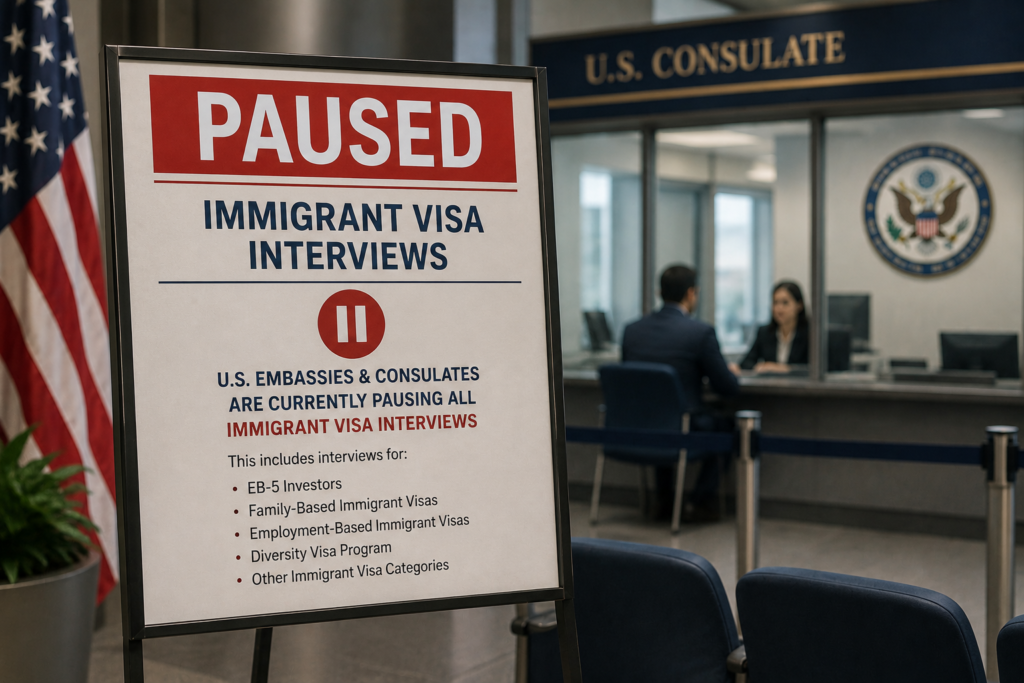
What EB-5 Investors Should Do as the State Department Pauses Immigrant Visa Interviews
Using gifted funds for an EB-5 investment? Learn how USCIS evaluates gift documentation, lawful source of funds, donor evidence, fund transfers, and common mistakes that can lead to RFEs or petition denials.
Are Company Loans Receiving Greater Source of Funds Scrutiny in EB-5 Cases?

USCIS is reportedly increasing scrutiny of company loans used to fund EB-5 investments. Learn why privately held business loans are facing deeper source-of-funds review and how investors can better prepare their I-526E petitions.
The EB-5 Sustainment Period: What Investors Need to Know

Confused about the EB-5 sustainment period? Learn how the 2022 Reform and Integrity Act changed the rules, when the clock starts, and what it means for your investment timeline.
Ensuring Success at the EB-5 I-829 Stage: Early Choices Have the Most Impact

I-829 approval is the final step in the EB-5 process. Learn how early decisions—project selection, job creation monitoring, and sustainment compliance—can determine success at the I-829 stage.
USCIS Shortens EAD Validity Period: What the Change Means for EB-5 Investors

USCIS has reduced EAD validity from five years to 18 months for adjustment applicants. Learn how this change impacts EB-5 investors and why proactive planning is now essential.
Understanding The Role of Escrow In EB-5

Escrow accounts play a key role in protecting EB-5 investor funds. Learn how escrow works, when it’s used, and why it matters for transparency, risk management, and immigration compliance.
DHS Ends Automatic EAD Extensions, Eliminating 540-Day Extension

Starting October 30, 2025, DHS will eliminate automatic 540-day EAD extensions for most renewal applicants. Learn who’s impacted, how to prepare, and what this means for lawful employment.
Understanding the IPO: The USCIS Division Handling EB-5

The Immigrant Investor Program Office (IPO) oversees all EB-5 petitions within USCIS. Learn how its role has evolved under the Reform and Integrity Act to ensure program transparency and investor protection.
How a U.S. Government Shutdown Impacts the EB-5 Immigrant Investor Program
A U.S. government shutdown won’t halt EB-5 petition processing, but delays may occur in visa issuance and inter-agency coordination. Learn what remains functional and what to watch for.
Understanding the Grandfather Clause in the EB-5 Reform and Integrity Act

The EB-5 Reform and Integrity Act protects petitions filed by Sept. 30, 2026, even if the program lapses. Learn how the grandfather clause ensures investor confidence and legal continuity.